
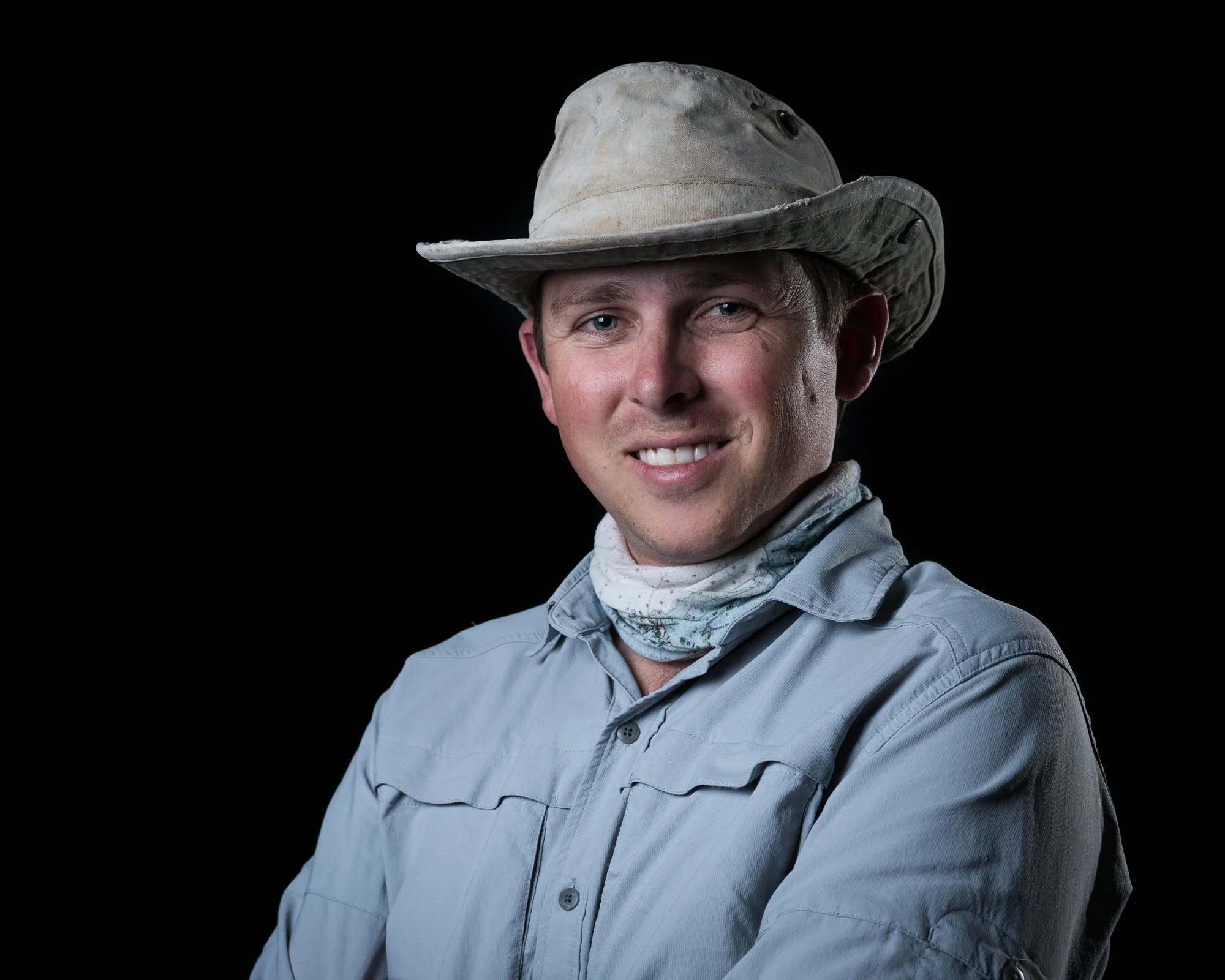
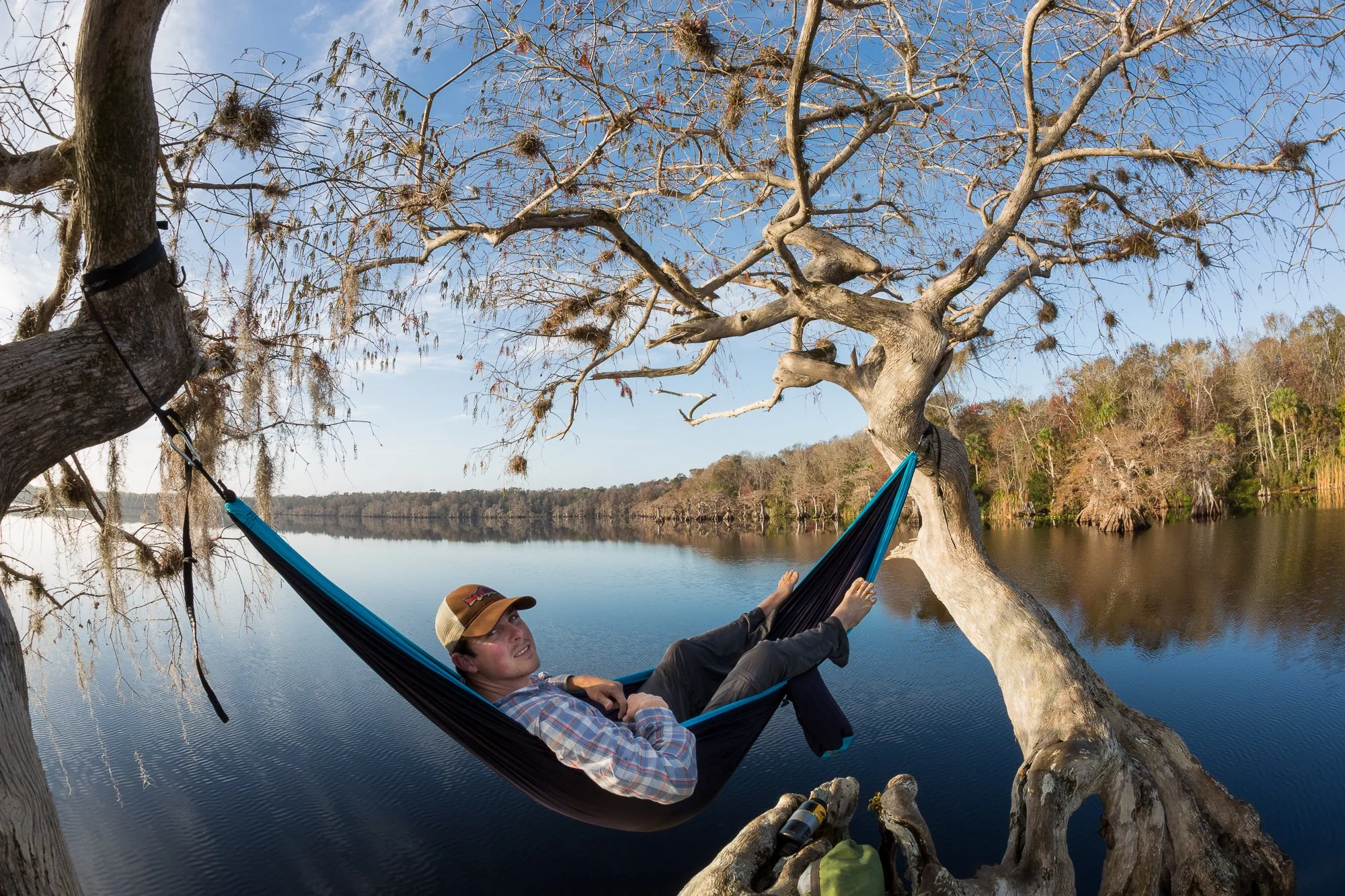
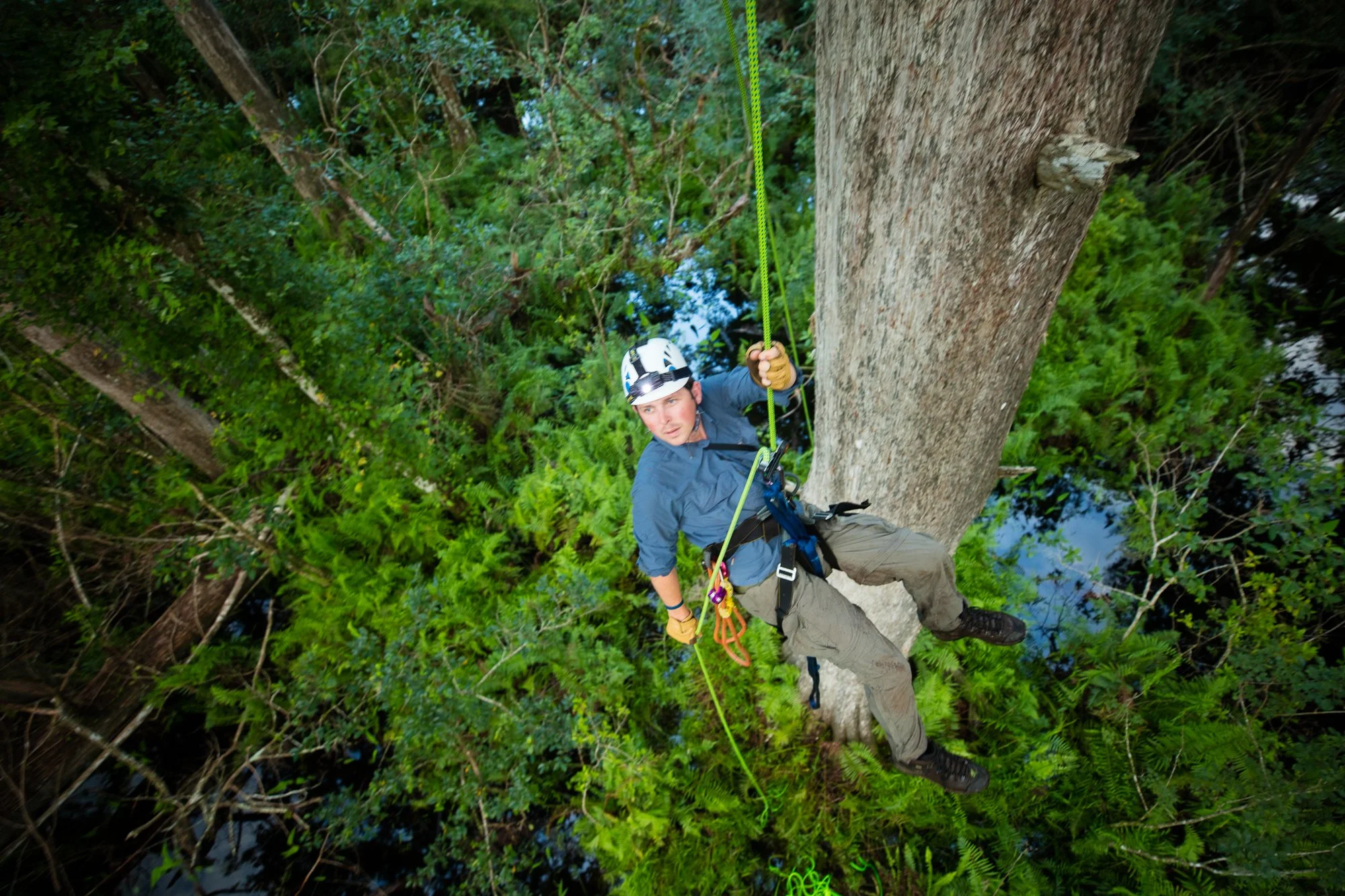
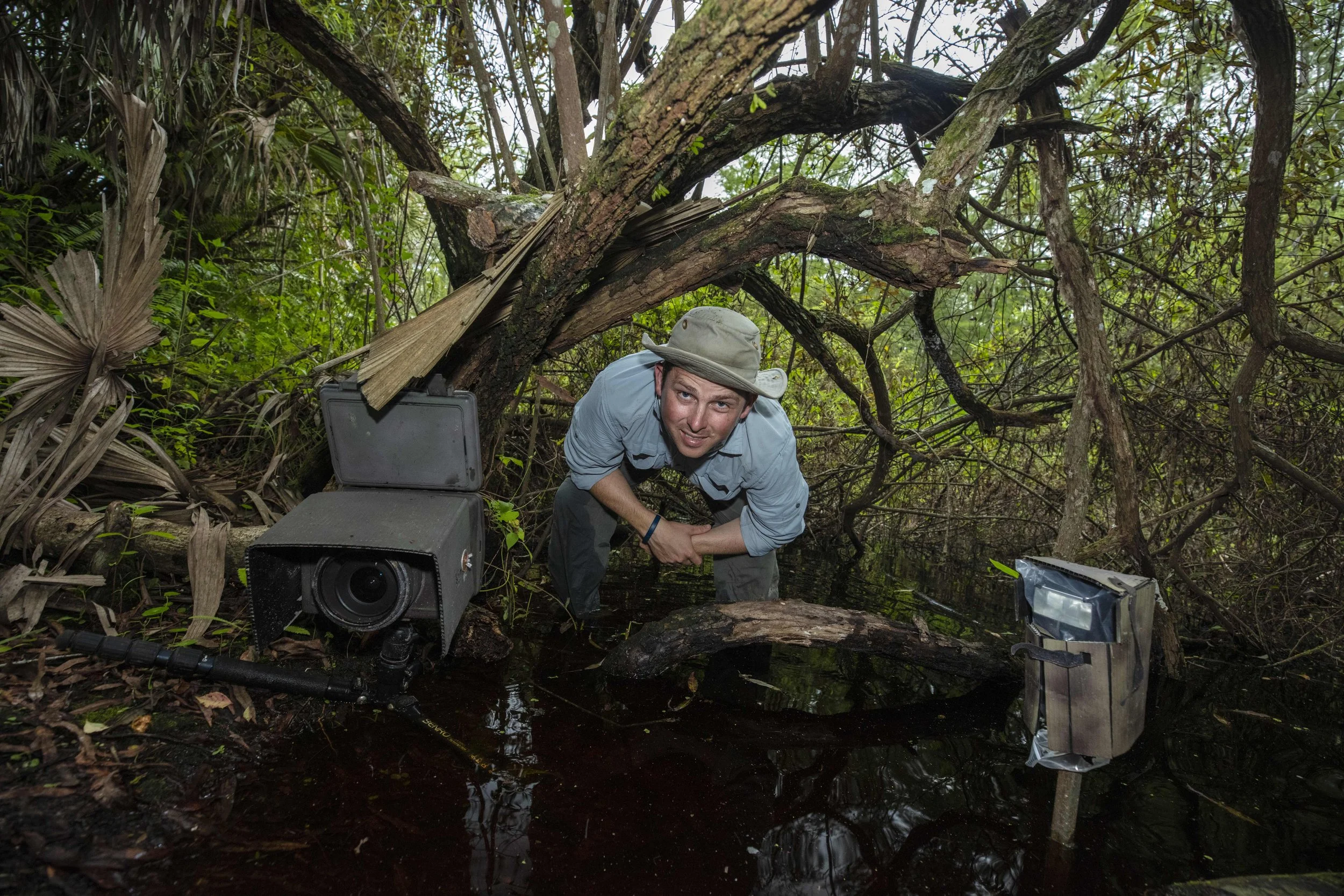
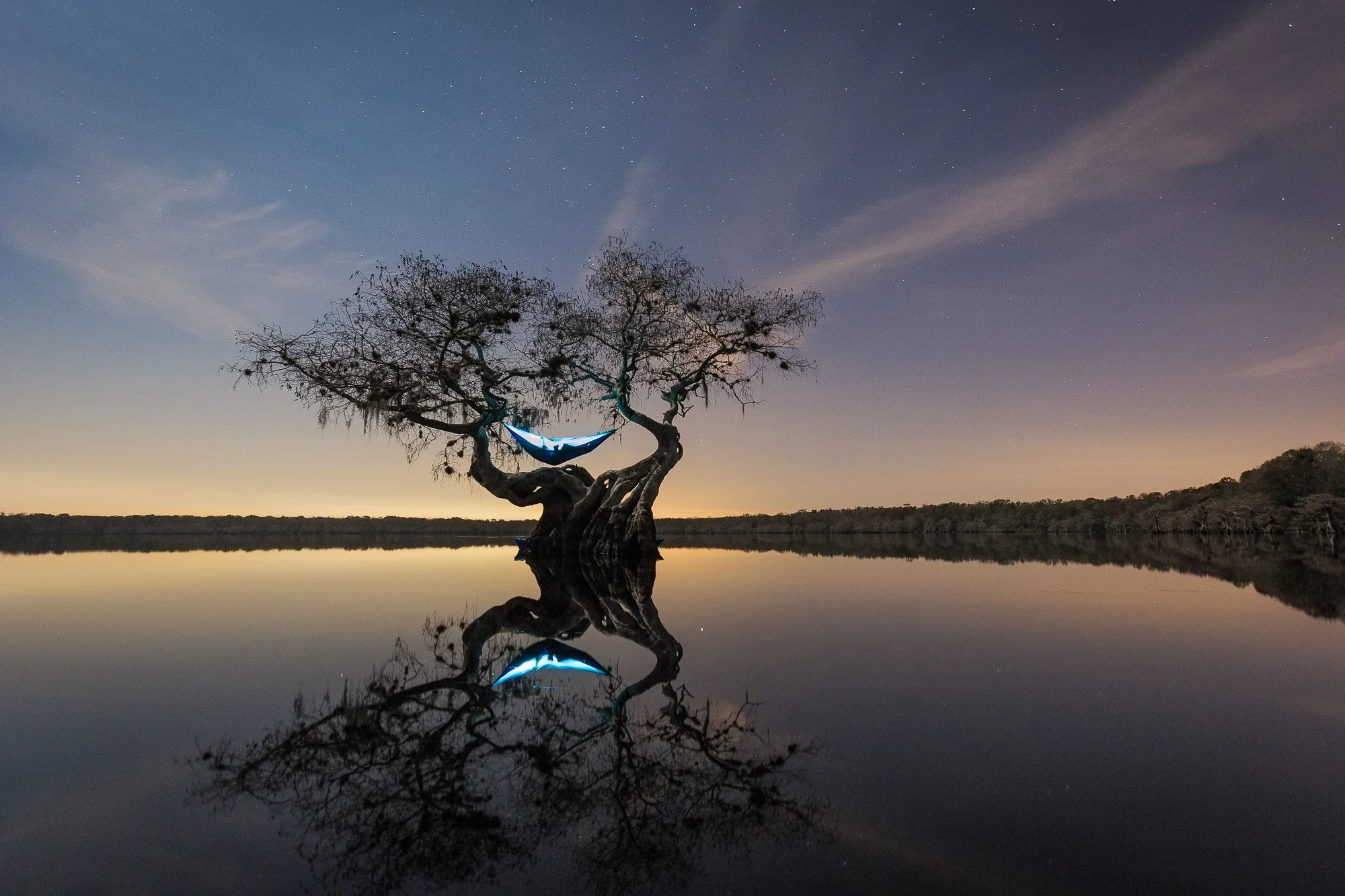
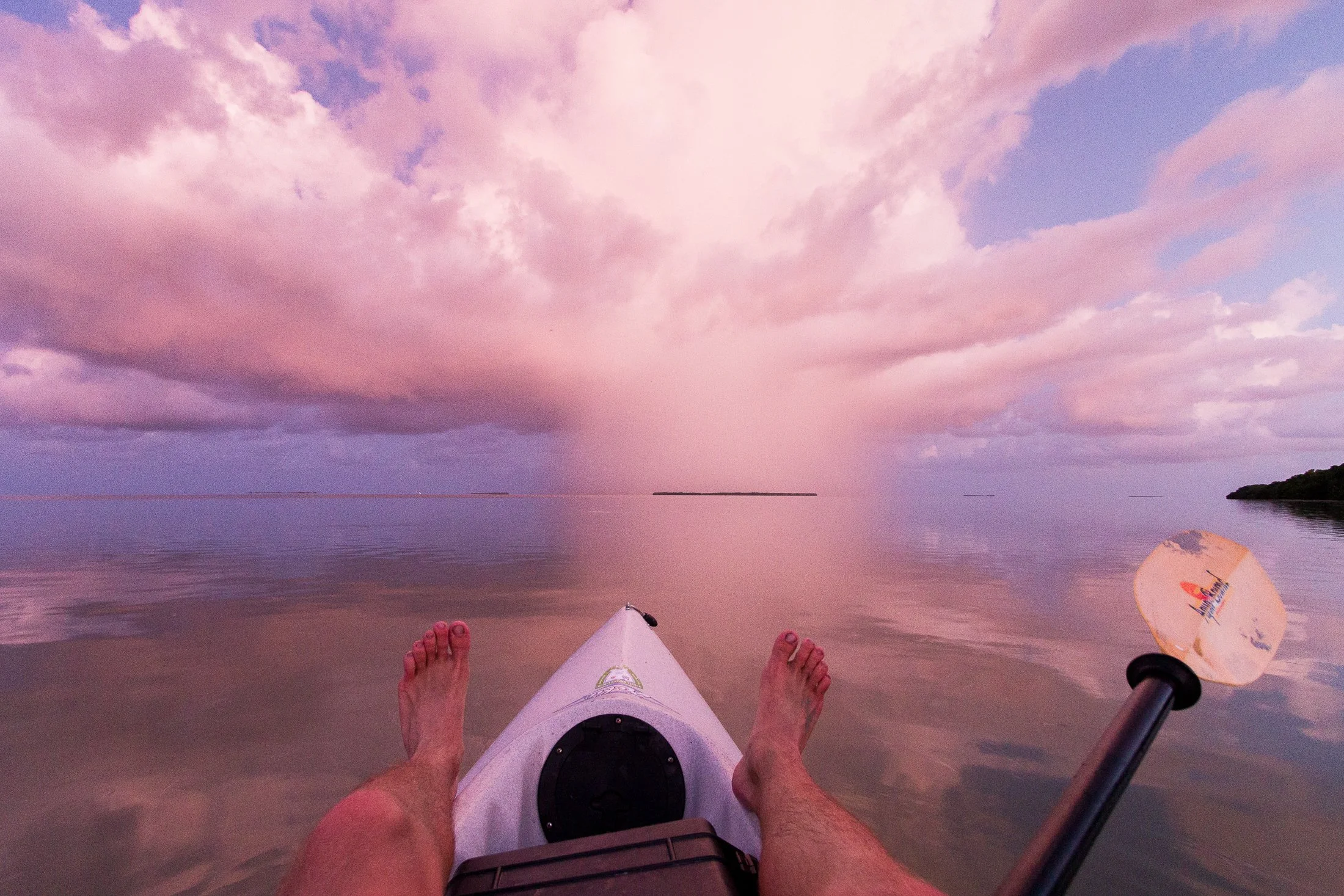
Mac Stone is a photographer, conservationist, producer, writer, naturalist, and speaker whose work explores the relationship between people and the wild landscapes of the American South.
He grew up exploring the springs, swamps, rivers, and hammocks of North Central Florida, where an early fascination with wildlife developed into parallel pursuits in science, photography, and conservation. Trained as a biologist and shaped by years of fieldwork, Stone approaches photography as both an artist and a naturalist. His understanding of ecology, animal behavior, hydrology, and natural history guides where he looks, how he works, and the stories he chooses to tell. That combination of scientific curiosity and visual storytelling has also contributed to field observations and discoveries that have expanded scientific understanding of the species and ecosystems he photographs.
Much of Stone's career has centered on wetlands—particularly the swamps, floodplains, springs, and coastal landscapes of the southeastern United States. His work seeks to challenge the longstanding perception of swamps as dark, dangerous, or undesirable places and instead reveal them as some of North America's most biologically rich, visually extraordinary, and ecologically important ecosystems.
After spending five years living and working throughout the Everglades watershed, Stone published Everglades: America's Wetland, a 304-page photographic exploration of the greater Everglades ecosystem published by University Press of Florida. Now in its second printing, the book documents the landscapes, wildlife, people, and environmental pressures shaping one of the world's great wetlands. Stone later brought that work to the TED stage with a talk about changing the way people see and value swamps and wetlands, which has been viewed more than one million times.
In 2026, Stone released two major books that expanded that work across the American South.
American Amazon: Ancient Forests and Living Waters of the Wild Southeastern U.S. explores the remarkable biological diversity of a region that Stone considers one of the great overlooked natural landscapes on Earth. From Appalachian headwaters and ancient forests to blackwater rivers, coastal marshes, springs, and the subtropical wetlands of Florida, the book examines the ecological connections that bind the Southeast together. It serves as a companion to American Amazon, the IMAX film and PBS NATURE series produced with Grizzly Creek Films, on which Stone worked as a producer and cinematographer.
His second 2026 release, Cypress: The Last Old-Growth Swamps, published by University Press of Florida, is an exploration of the last remaining ancient bald cypress forests of the American South. The project takes readers into surviving pockets of old growth to reveal what southern floodplains and wetlands looked like before widespread industrial logging transformed them. Combining photography, natural history, conservation, and science, the book examines not only the extraordinary age and scale of these forests but also the ecological processes that have allowed them to endure for centuries—and, in some cases, millennia.
Stone is a contributing photographer for National Geographic Magazine, a National Geographic Society Explorer, and a Senior Fellow with the International League of Conservation Photographers. His images have appeared in numerous publications and conservation campaigns and awarded by many of the world's leading nature photography competitions, including Wildlife Photographer of the Year.
Stone now lives in South Carolina with his wife and two children. There, he also serves as Executive Director of Naturaland Trust, one of the oldest land trusts in the Southeast. During his tenure, he has helped raise more than $50 million for land conservation and has worked with public agencies, private landowners, foundations, and conservation partners to protect tens of thousands of acres across the region.
Through Naturaland Trust, Stone has helped conserve and restore lands that expand state parks, wildlife management areas, heritage preserves, river corridors, mountains, wetlands and other publicly accessible natural areas. The work is the realization of a lifelong aspiration that impactful photographs and stories can inspire people to value wild places.
Across his photography, books, films, scientific fieldwork, speaking, and land conservation, Stone shares his love of the natural world and advocating for the landscapes that inspire him. Through his images, he brings people into wild places—believing that when people develop a personal connection with a landscape or species, understanding deepens, empathy follows, and the desire to protect it becomes their own.